deutsch english

Early Work: Drawings, 1904-1906
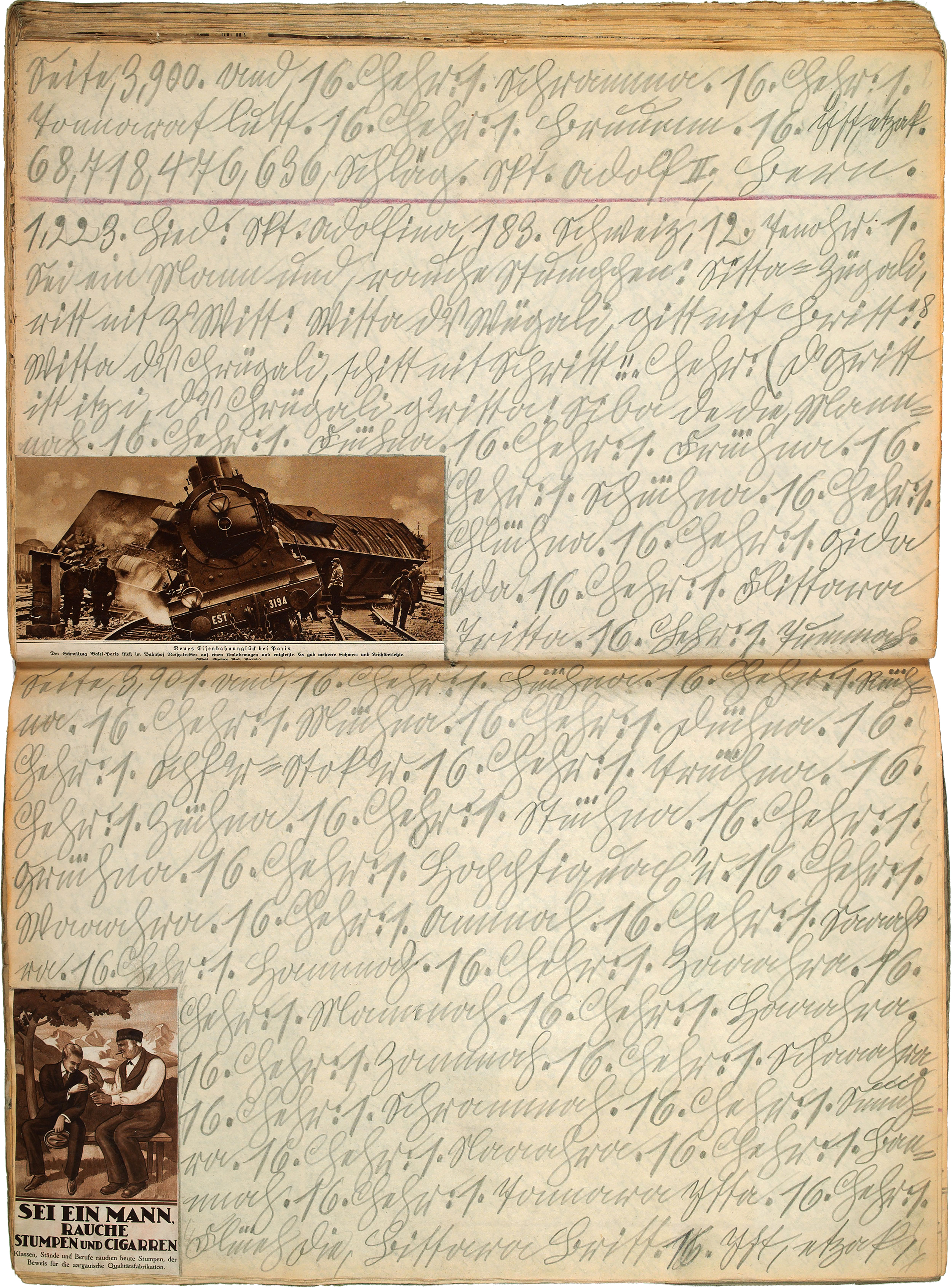
During his first years at Waldau Wölfli was an agitated and violent patient. In 1899, about four years after his hospitalization, his state improved (as noted in his medical history). At this point, Wölfli had begun to draw. Since no drawings have been preserved from 1899 to 1903, the entries in the medical history remain the only testimony on the beginnings of Wölfli's art: "Patient passes the time with drawings." (November 1899) One year later we read that Wölfli "draws a lot of notes and composes (he says) large pieces of music." In January 1902 Wölfli is said to "be calmer, since he is allowed to draw and gets every week a new pencil," and in October: "He has drawn very industriously for the entire summer and used up his pencil weekly; his drawings are very stupid stuff, a chaotic jumble of notes, words, figures, and he gives to the individual pieces fantastic names such as: 'Trumpetstrands,' 'Lower Abyss,' etc."

Adolf Wölfli
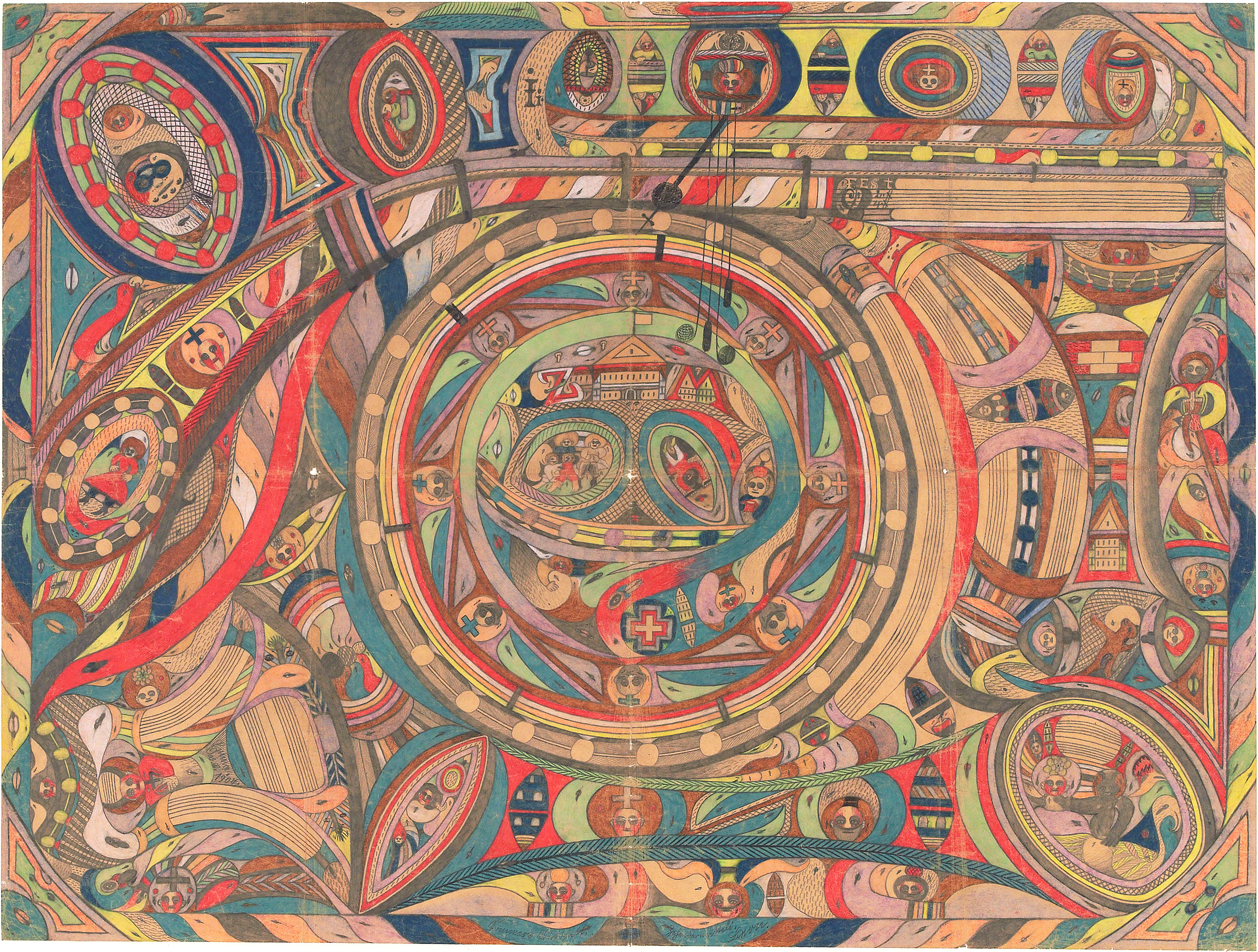
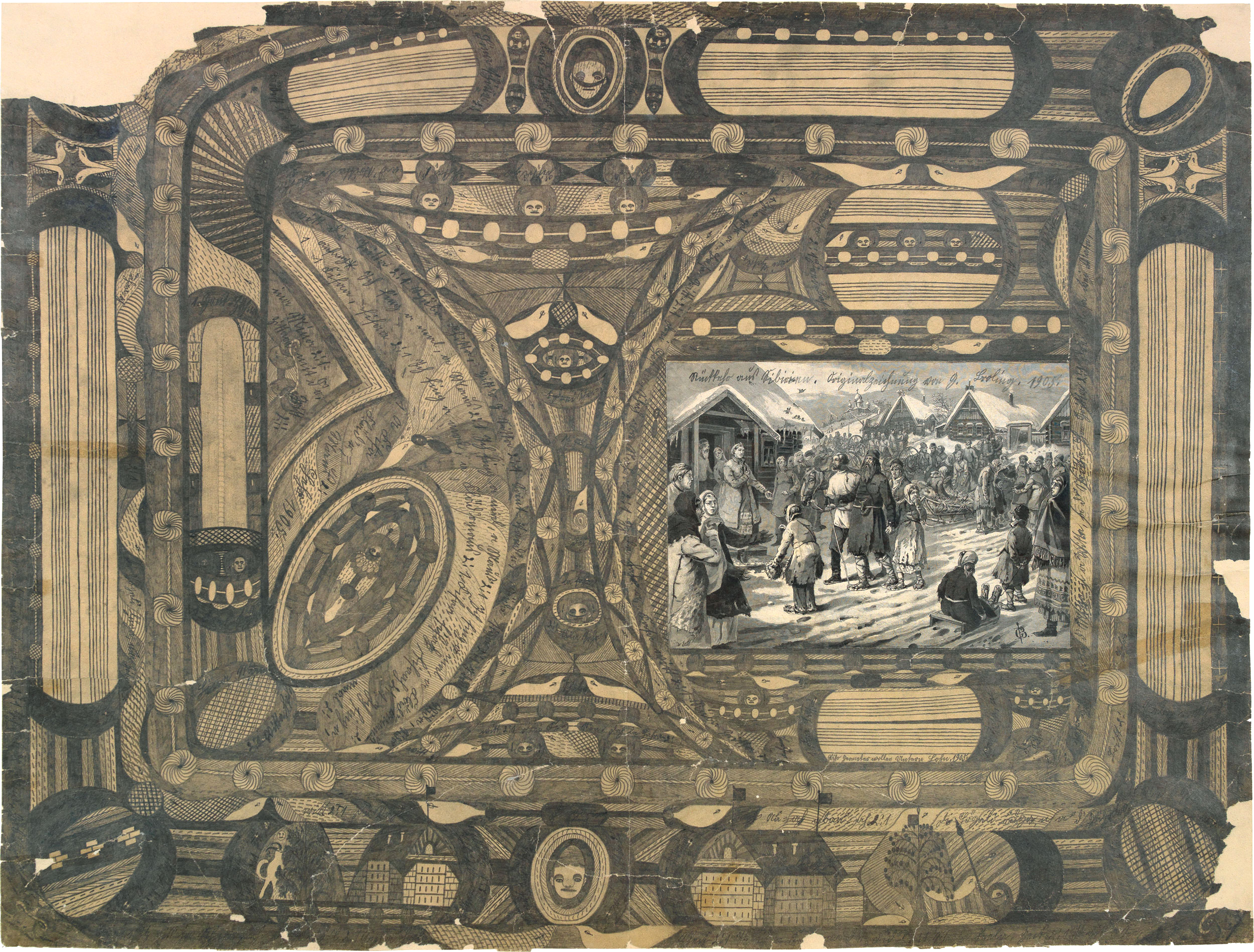
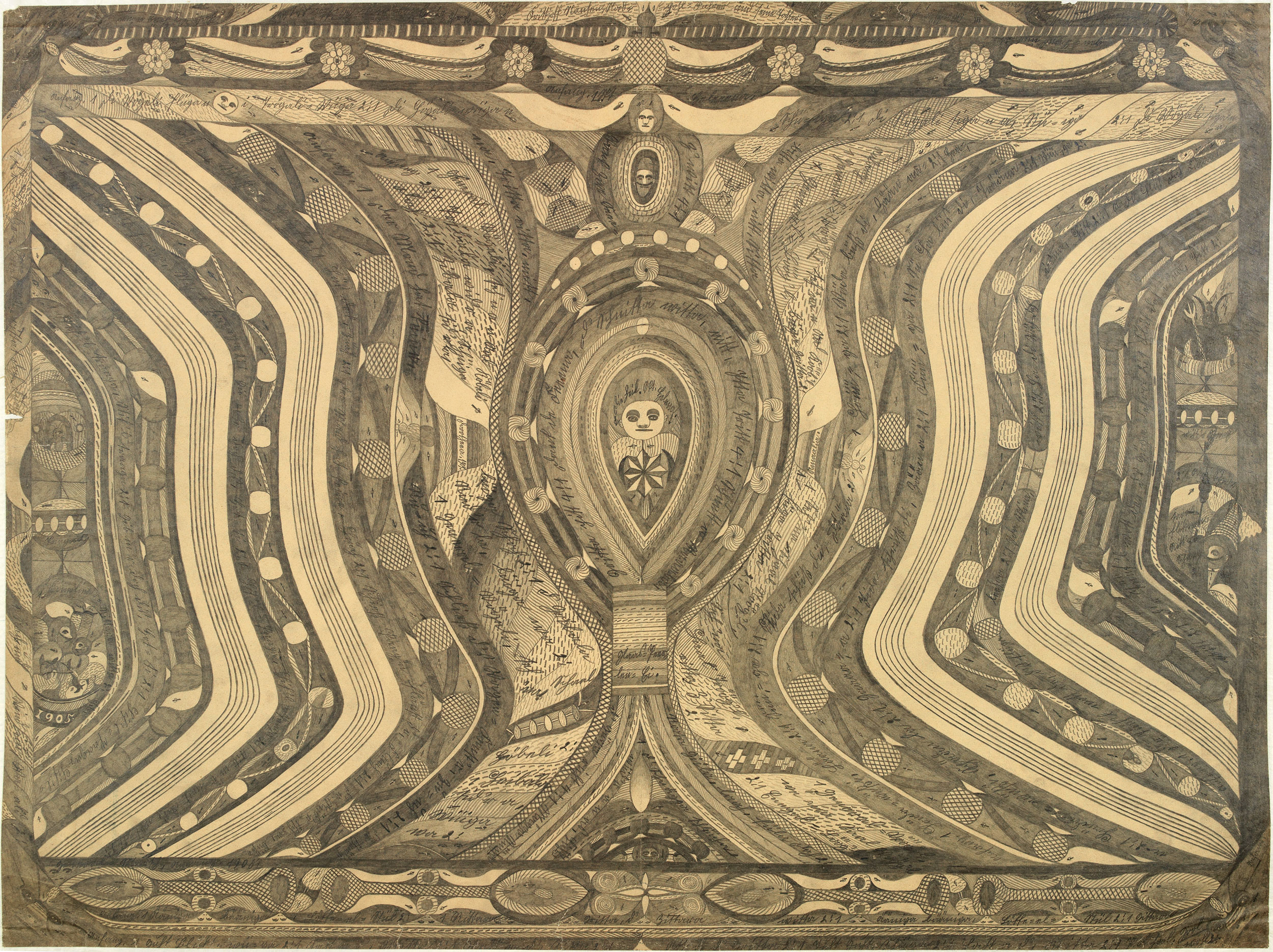
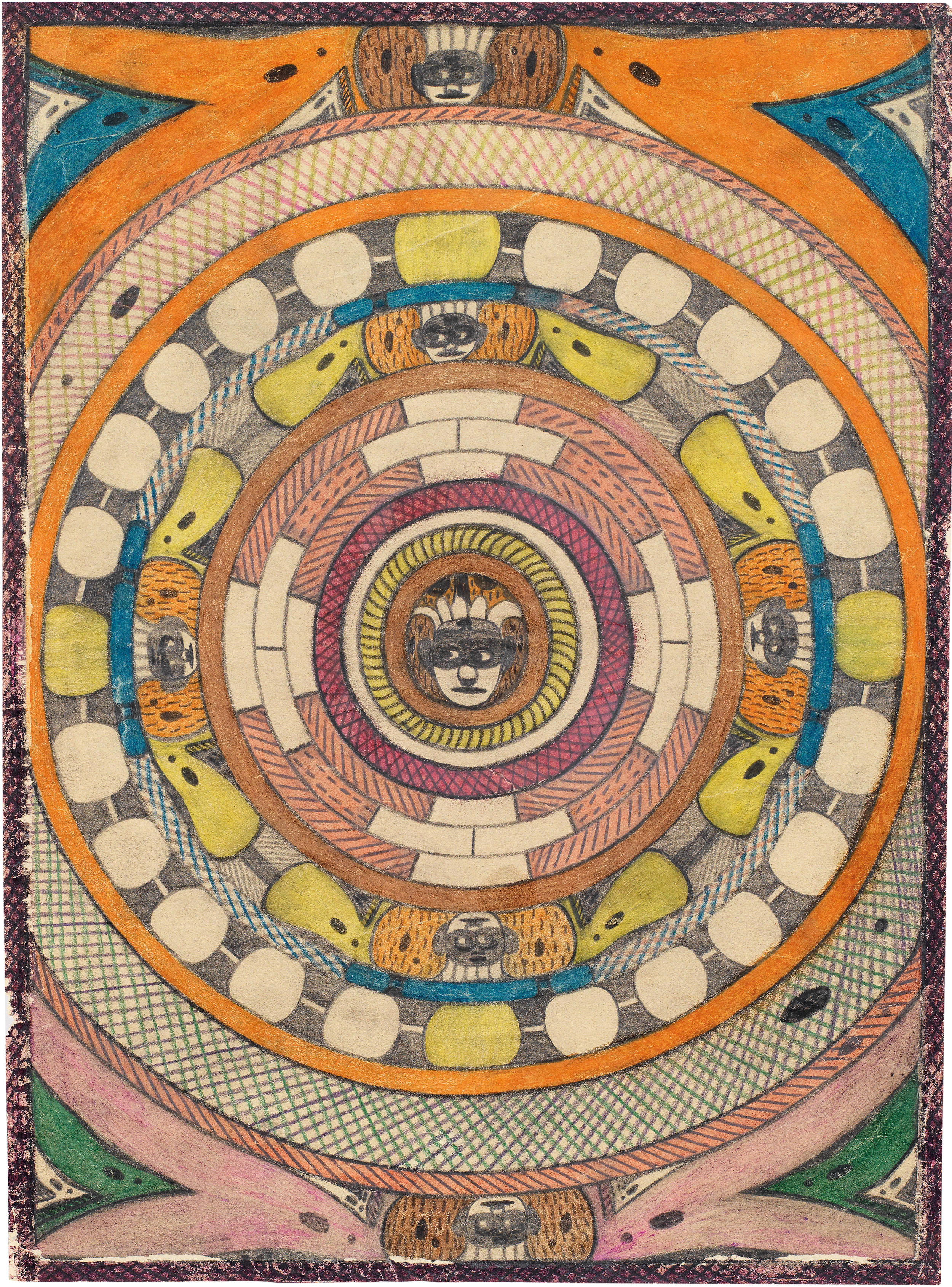
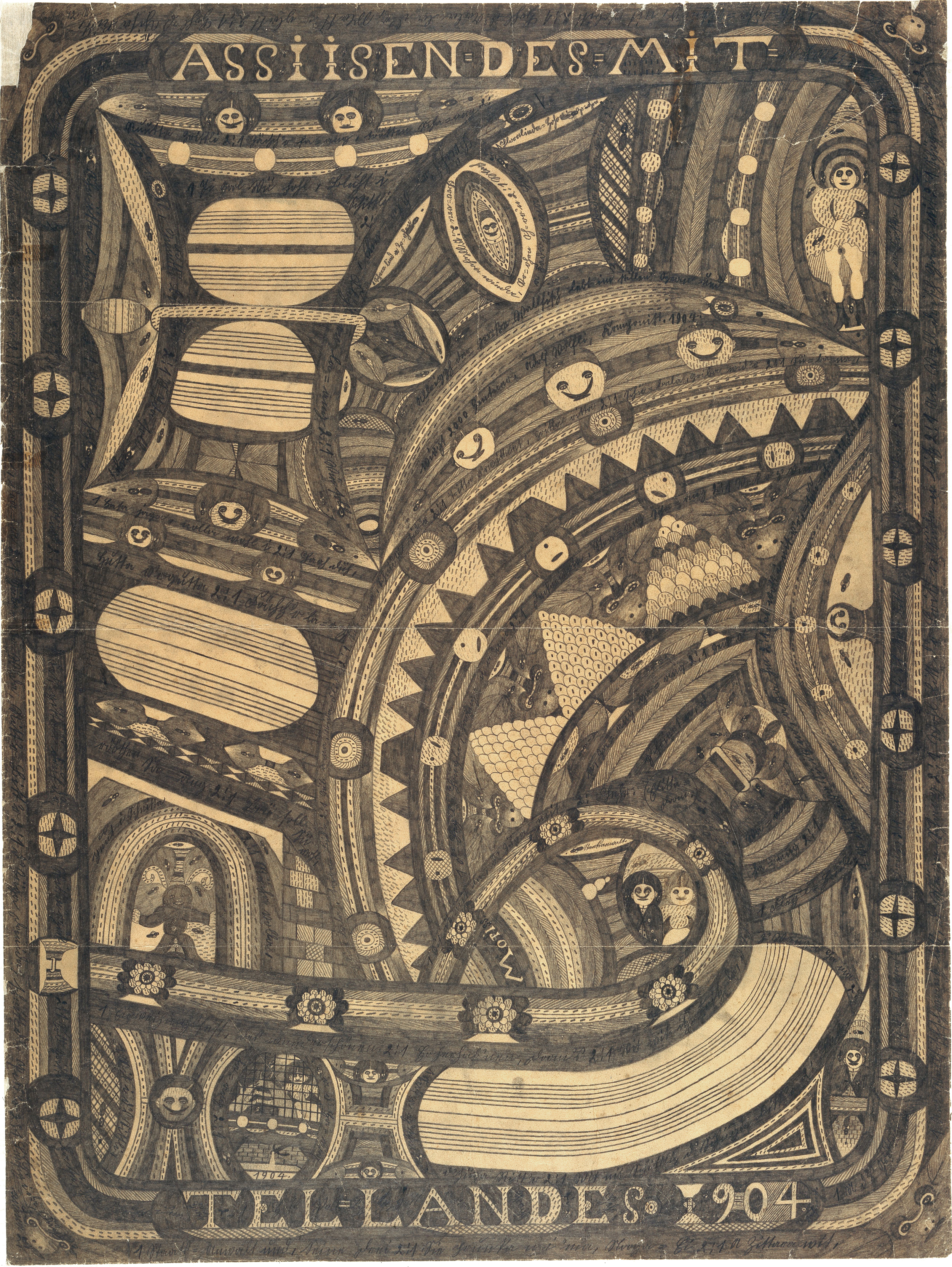
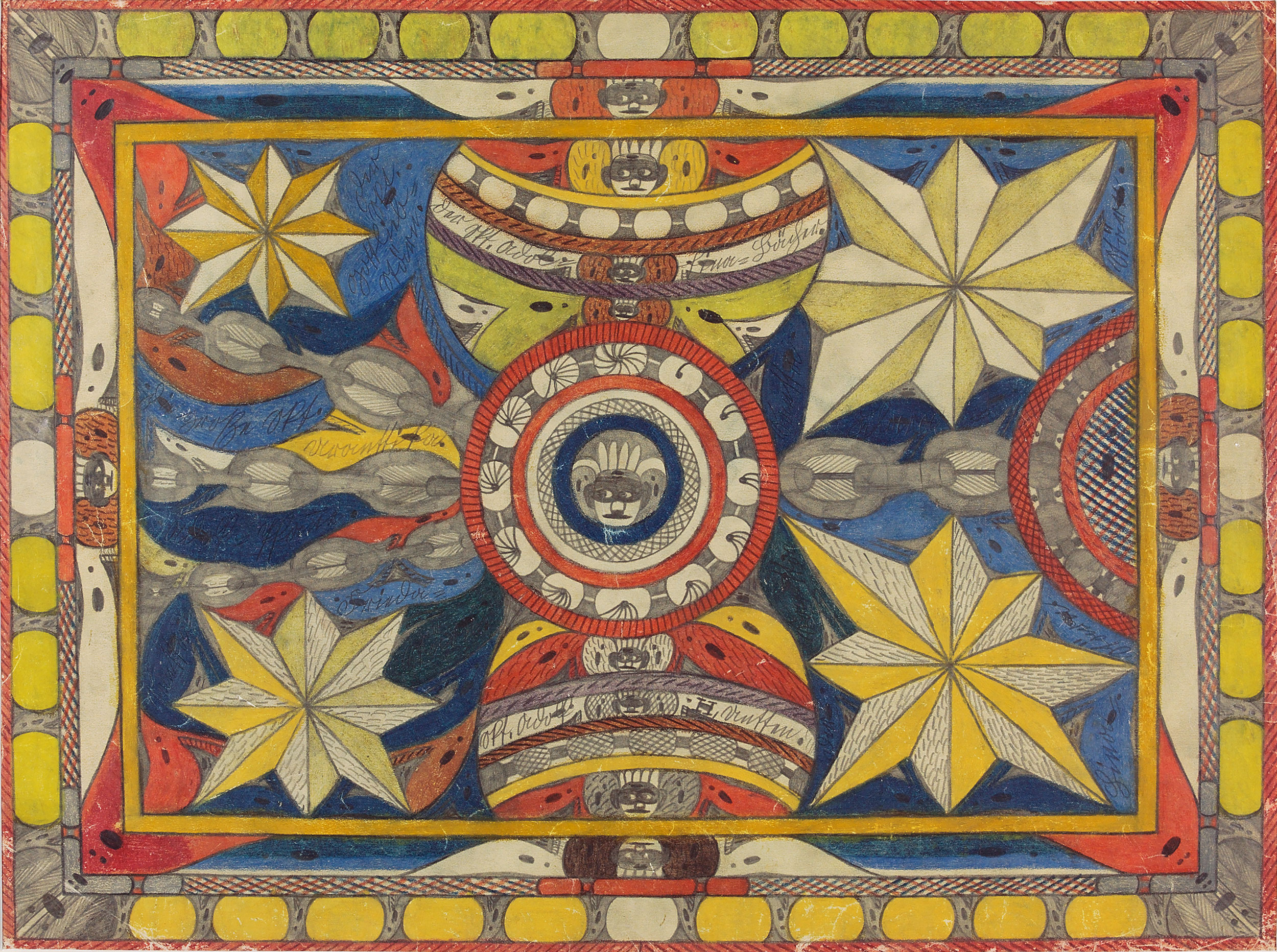
"Petrol", 1904
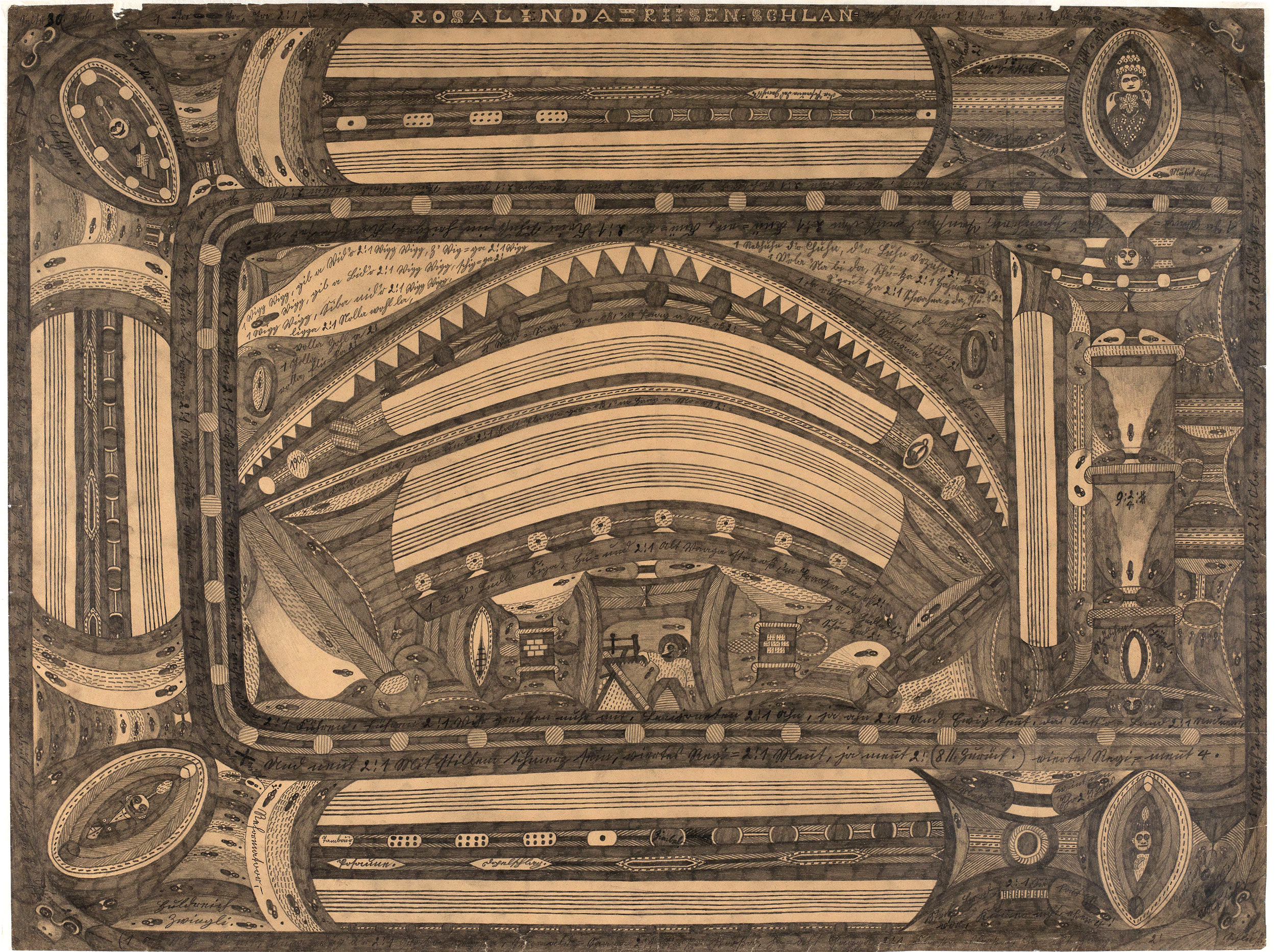
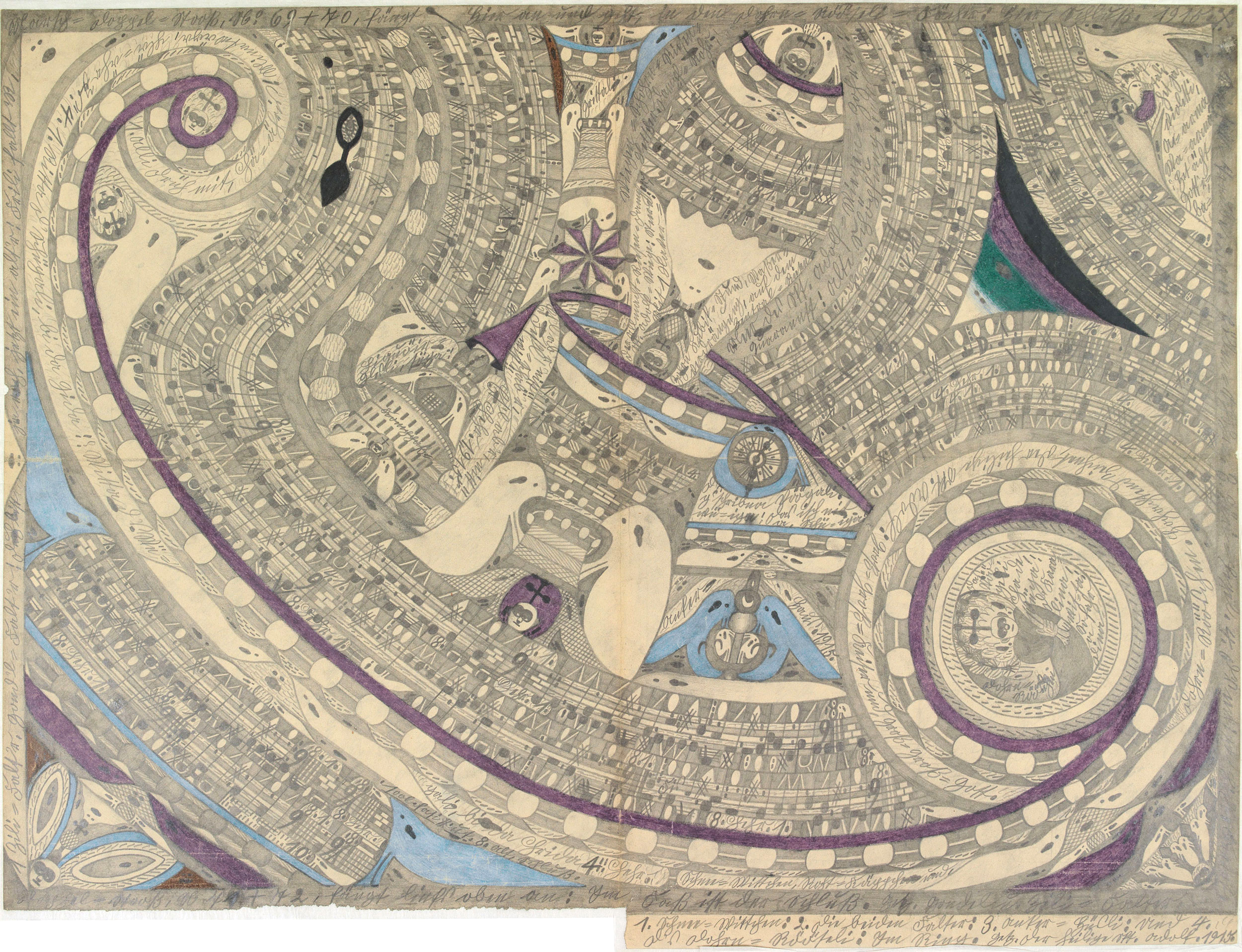
The drawings from 1904 to 1906 form a unified group and well-defined block oeuvre, marked by high-quality draftsmanship and artistic vision. These drawings are the actual foundation from which Wölfli's art developed. Here, we find those elements of form and content which would characterize all his work. Indeed, this compact early group occupies a special position in his work, for if Wölfli had not created anything else, these drawings would suffice to secure his place among the visionary artists of the twentieth century.

In the drawings of 1904-1906, Wölfli uses a variety of shading devices such as cross-hatching, dots, and stripes to make the forms stand out individually and to produce contrasts of light and dark. Together with the straight and circular contour lines drawn freehand, these shading devices and fillers are testimony to his great ability as a graphic artist. He himself sometimes calls his drawings "copper engravings" and "steel engravings."

The identification of the different superimposed motifs is made difficult by the prevalence of ornamental interlace. The forms fall into the following basic divisions: transformational ornaments, ornamental strips, form as filling, signs and geometric forms. Though they are sometimes used separately, they are frequently combined and made to serve more than one function simultaneously. The following description of the ornamental forms and the schematic drawings are intended as an aid for the observer.

The most important transformational ornaments are the "snails." They are the simplest structures and consist of a longish, flat crescent shape sometimes marked with a line and a dot as an eye and ear, sometimes with just a line. In some drawings Wölfli gives them specific names: (1904) "Light-Snail," "Bandage-Snail," "Snail-Star-Ring," "Noga-Snail-Star," "Herdsman-Snail," "Herdswoman-Snail". The snails appear singly or as symmetrical pairs, sometimes in bundles and sometimes in bands. Larger snails with pronounced eyes look like mice or rats.
The "bird" form, which later becomes the single most important element of Wölfli's vocabulary, is not yet fully developed in the early drawings (the typical "bird" attains its definitive form from 1908 on, in the illustrations of the narrative work). In the early drawings the birds are still very similar to the snails; they differ from them only in their articulated curved necks and their slightly raised tails; they are still drawn without feet. To some of these snail/bird figures Wölfli gives names, such as "Christ-Bird," "Fountain-Bird," "General-Bird," "Midwife-Bird," "Music-Barrel-Bird" etc.

Wölfli called the ornamental bands rings. The most important one is the ring of bells, composed of circle or oval forms. Knotted into a simple band, it is comparable to a string of pearls or the classical egg motif. The bells are intricately decorated with various cross-hatchings and shadings. Centrally located screwlike lines turn them into balls of wool or rosettes. Ornamental bands can be added to the rosette, peacock-eye, zigzag, and brickwork patterns.
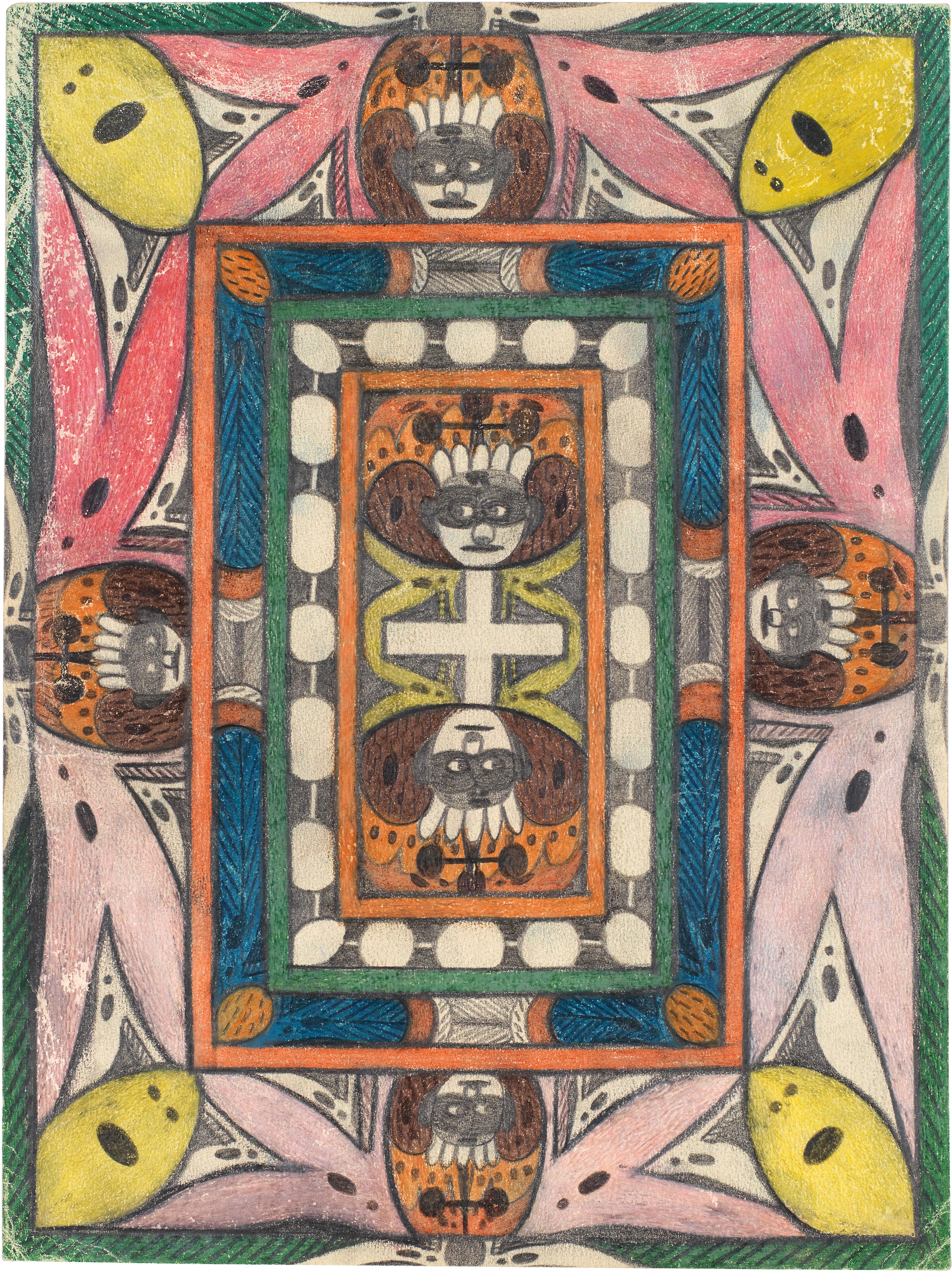
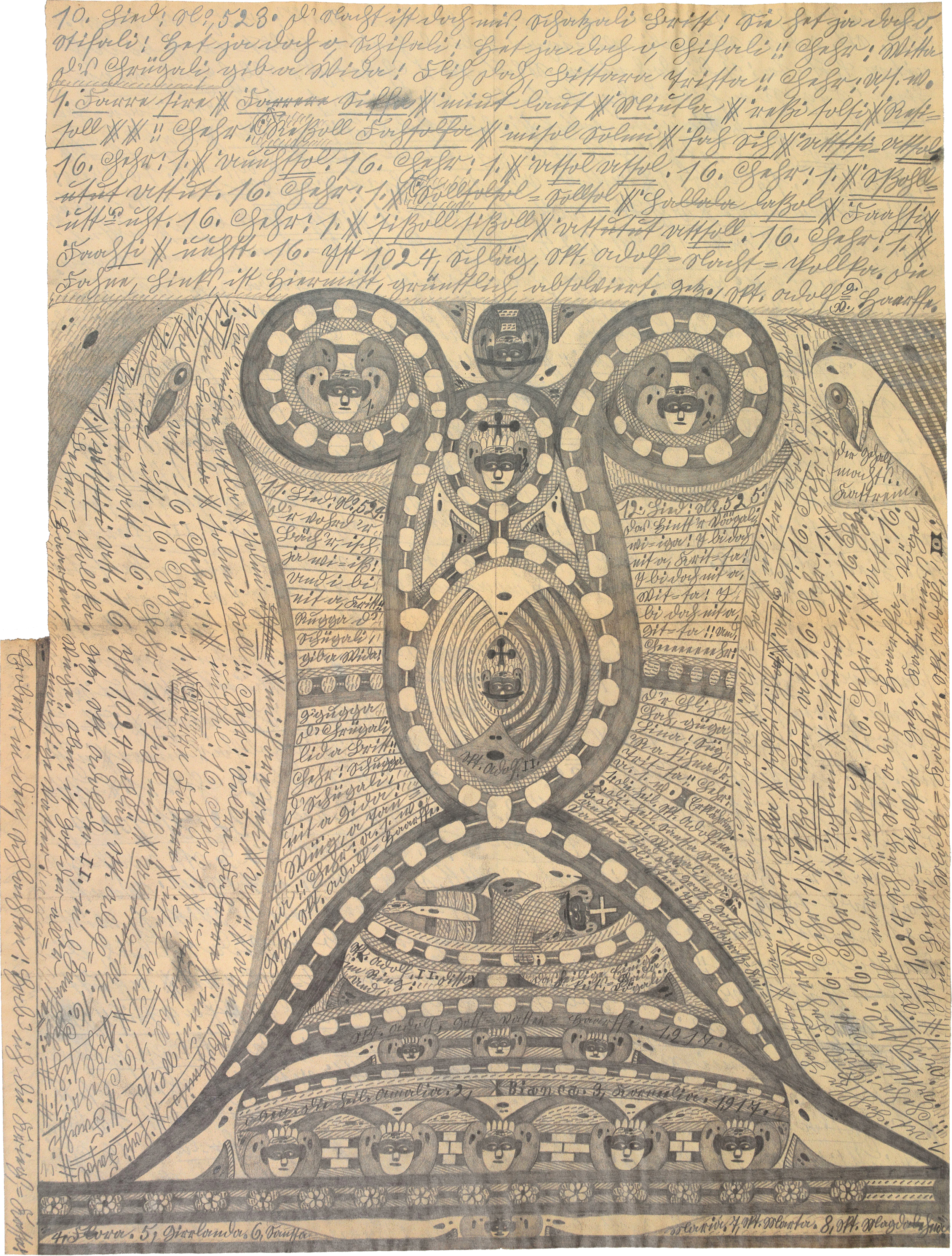
The signs used are primarily the letters B, E, H, I, N, Z, and of course A and W. Originally used as initials -- A. W. for Adolf Wölfli and E.B. for Elisabeth Bieri -- the letters can become linking elements of the composition of a picture. The symmetry of H, N, and Z -- top equals bottom, right equals left -- makes them especially useful as linking elements. In 1905 Wölfi inserted human faces into the empty spaces of the letter, for instance, in the arched space created by the crossbar of the letter H. The letters become compressed, thus making the shaped spaces into figurations that can be read as both positive and negative images. They are an example of the binary perception in Wölfli's work by means of which positive and negative spaces are equally readable and alternately size the viewer's attention.

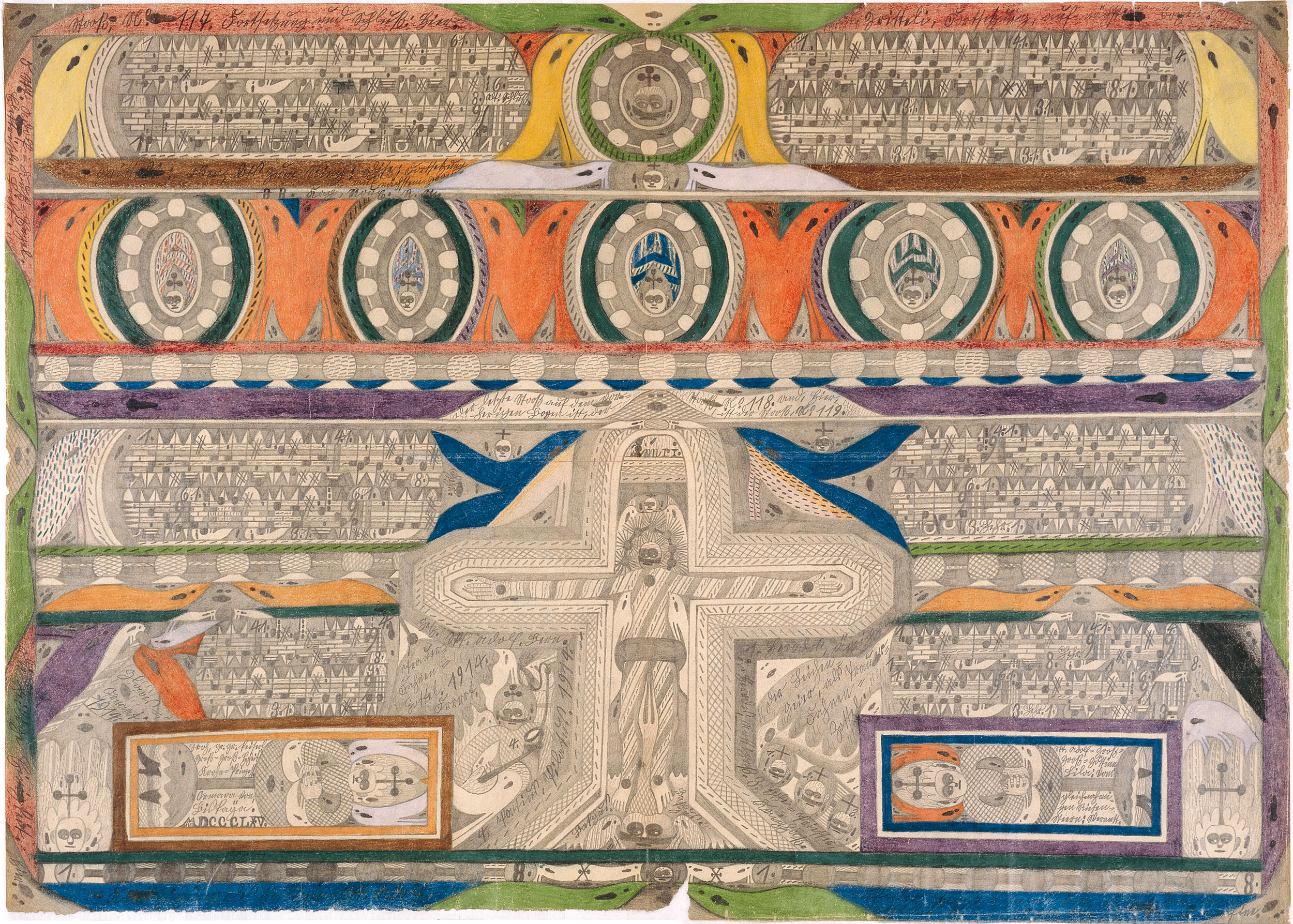
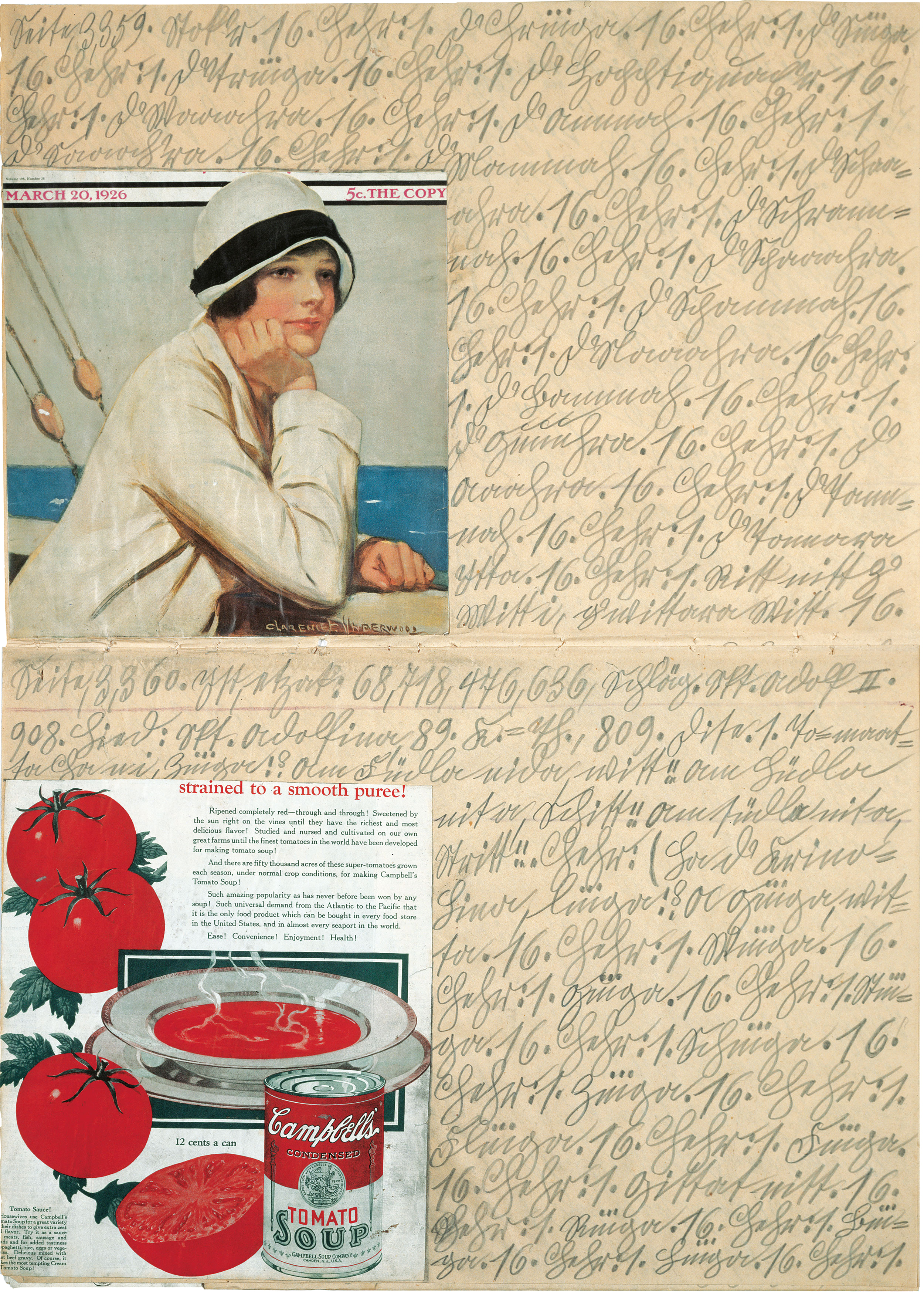
The great many numerals in the drawings are usually indications of musical rhythms. Throughout his work Wölfli uses the number series 2, 4, 8, 16, and 32. The number 64, the last number of the hexameter, Wölfli does not execute, in either the early or the later drawings, but he reaches the number 64 in the mandala composition Catholic Spiritual Center Rome, drawing the number 8 eight times (8 x 8 = 64).

The "eye-mask", which, like the bird, is another typical and important motif later, is not to be found in the early drawings. Here the eyes look straight ahead and are not turned to the side as they are in the faces wearing masks in the drawings after 1914.

The scenes in the early drawings consist of naturalistically drawn figures of people, animals, interiors, and landscapes. Most renderings are portraits or self-portraits. In the 1904-1906 drawings Wölfli always represents himself as an adult and not as the child "Doufi," his alter ego, who becomes the protagonist in the narrative work.

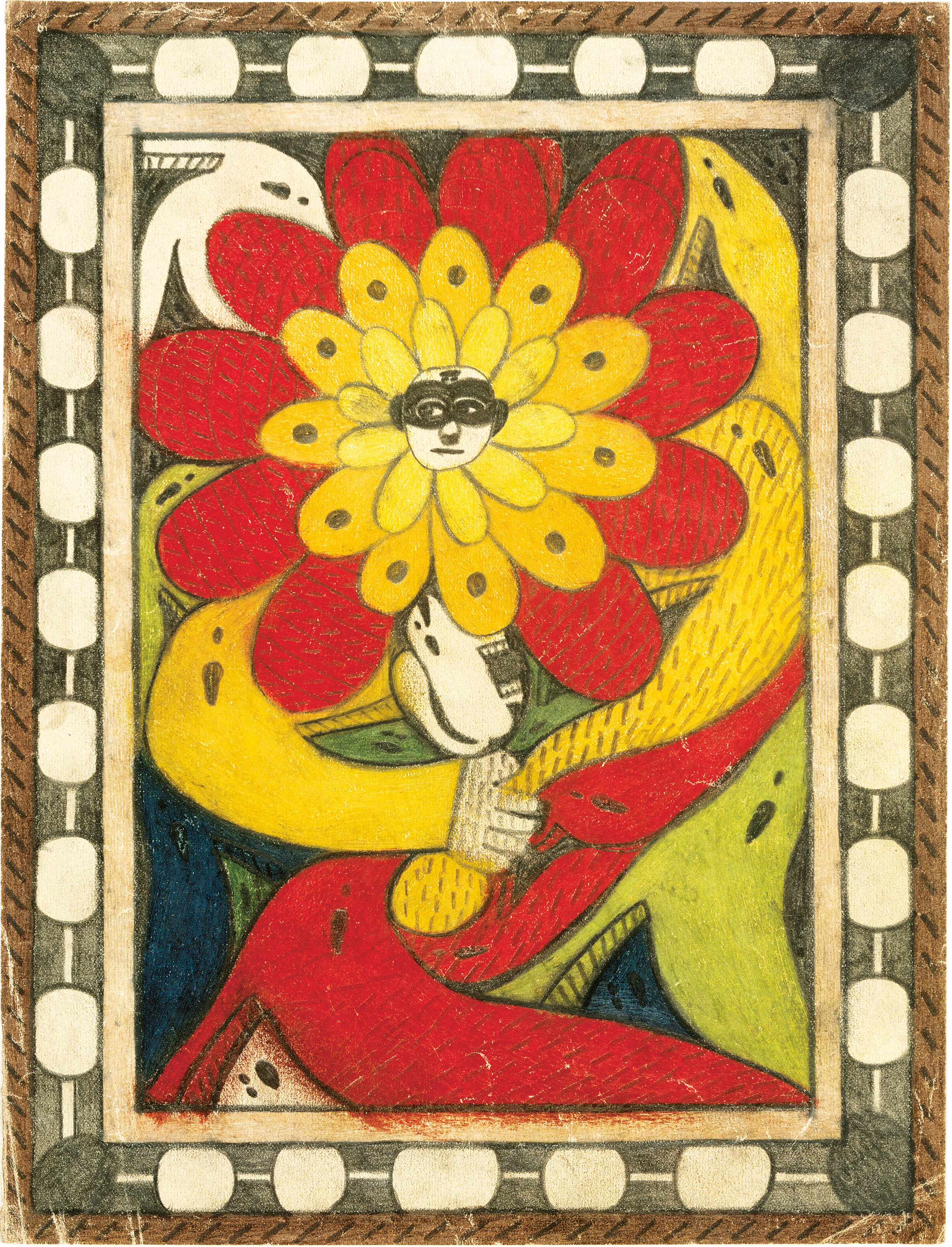
Alongside his friends and acquaintances -- for instance, Elisabeth Bieri, Magdalena Reber, and Rosa Schenk -- Wölfli portrayed public figures of the political and cultural spheres ; the men carry weapons: rifles, swords, spears, as well as an axe, a fishing rod, a cane, a bat, a flag, or a sceptre ; the female attributes are elaborate hairdos decorated with flowers, aprons, high-heeled shoes, mirrors, trailing skirts, purses, and parasols. Landscapes and architecture are rendered naturalistically. We see, among other things, mountains, trees, farmhouses, hotels, monuments, fountains, bridges, portals, arcades, windows, screens, staircases, etc. The interiors are equipped with clocks, candle holders, and lamps. Animals represented are the fish, cat, ram, horse, cow, goat, and panther.

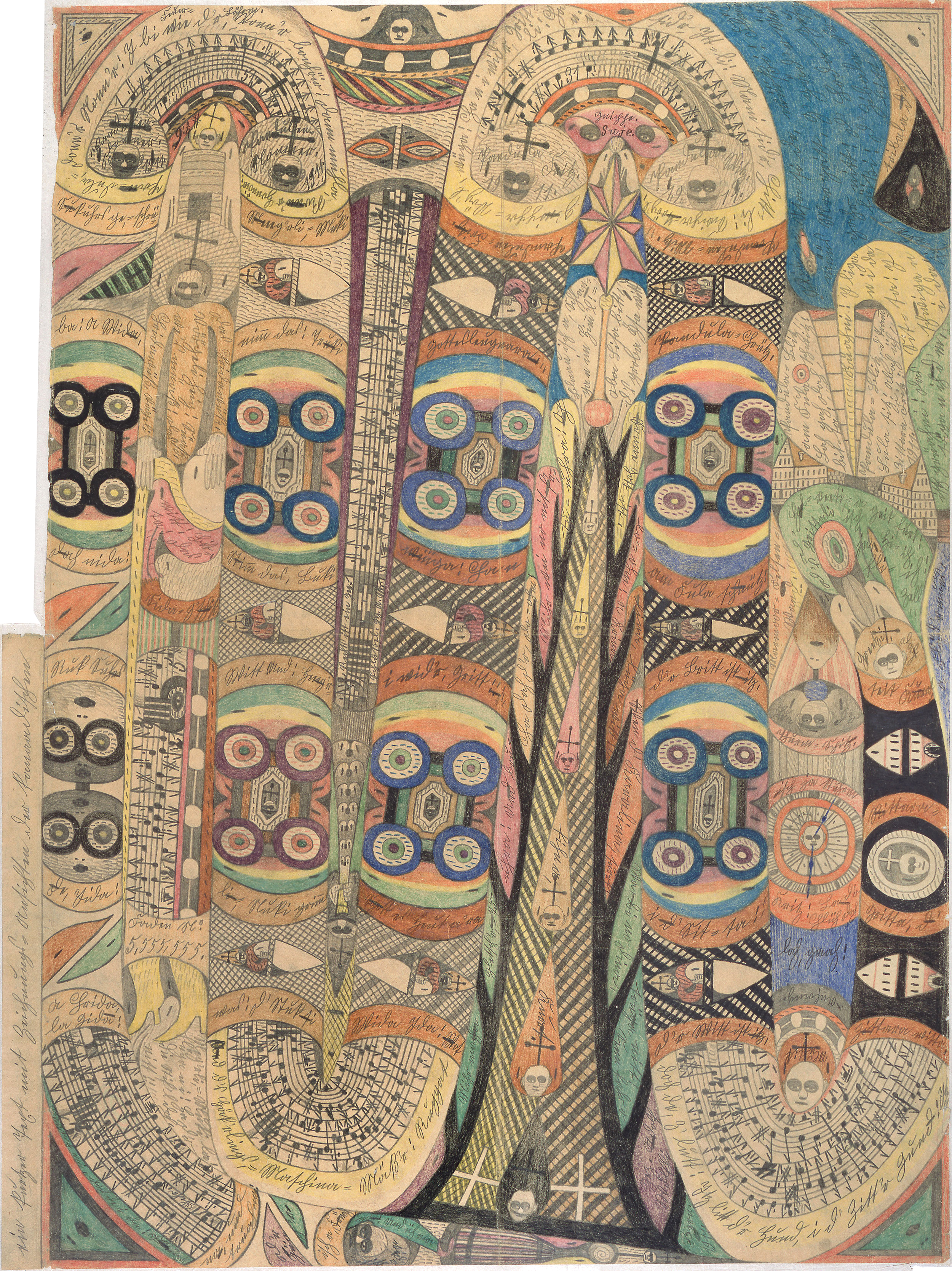
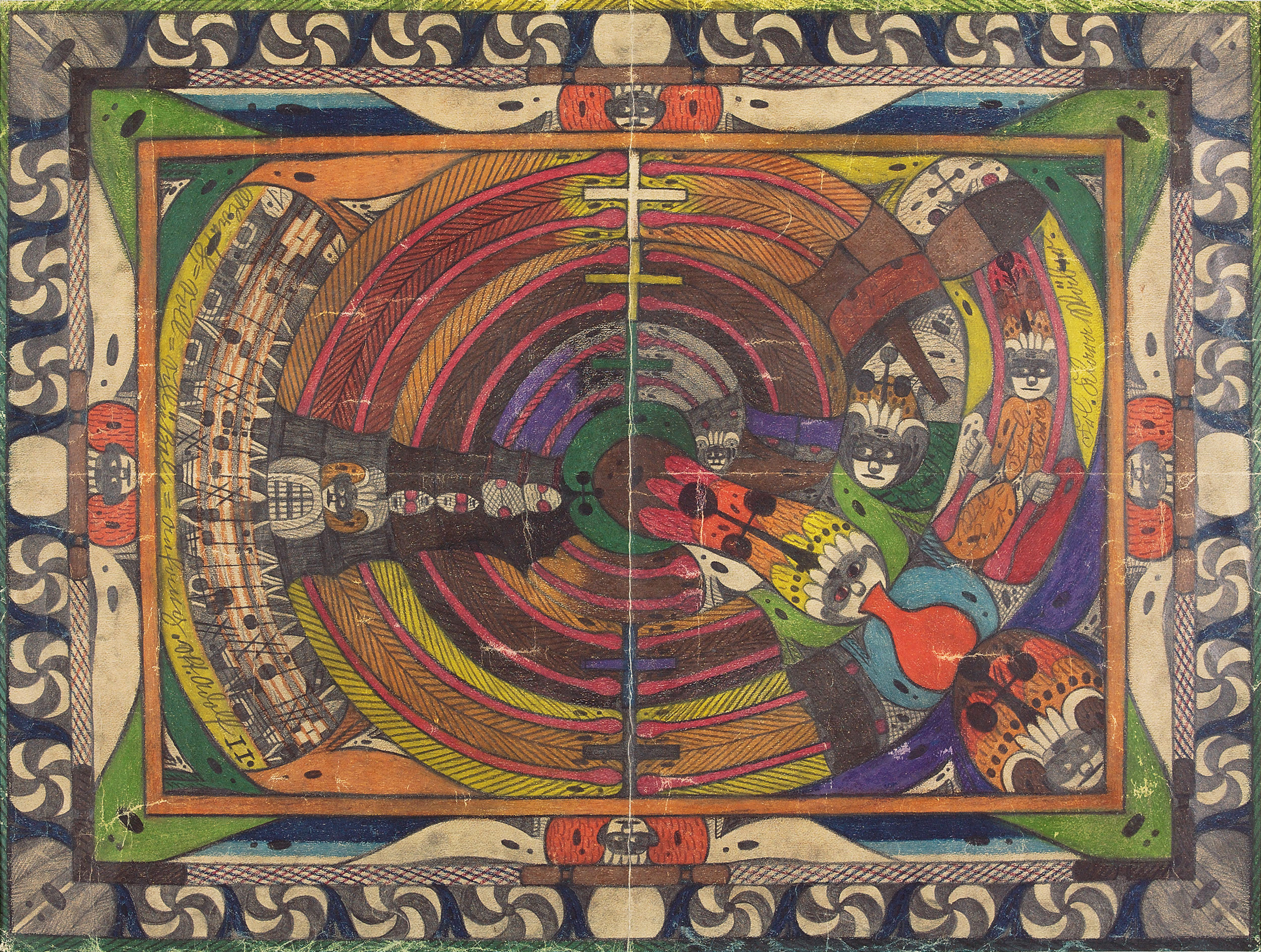
The early drawings elude a conclusive interpretation of the content. Of the manifold strands of superimposed themes and possible readings we can isolate only some meanings, and even those are sometimes partial. The appearance of mandalas in the early drawings has to be viewed as a breakthrough of great import: unified geometric order replaces chaos.

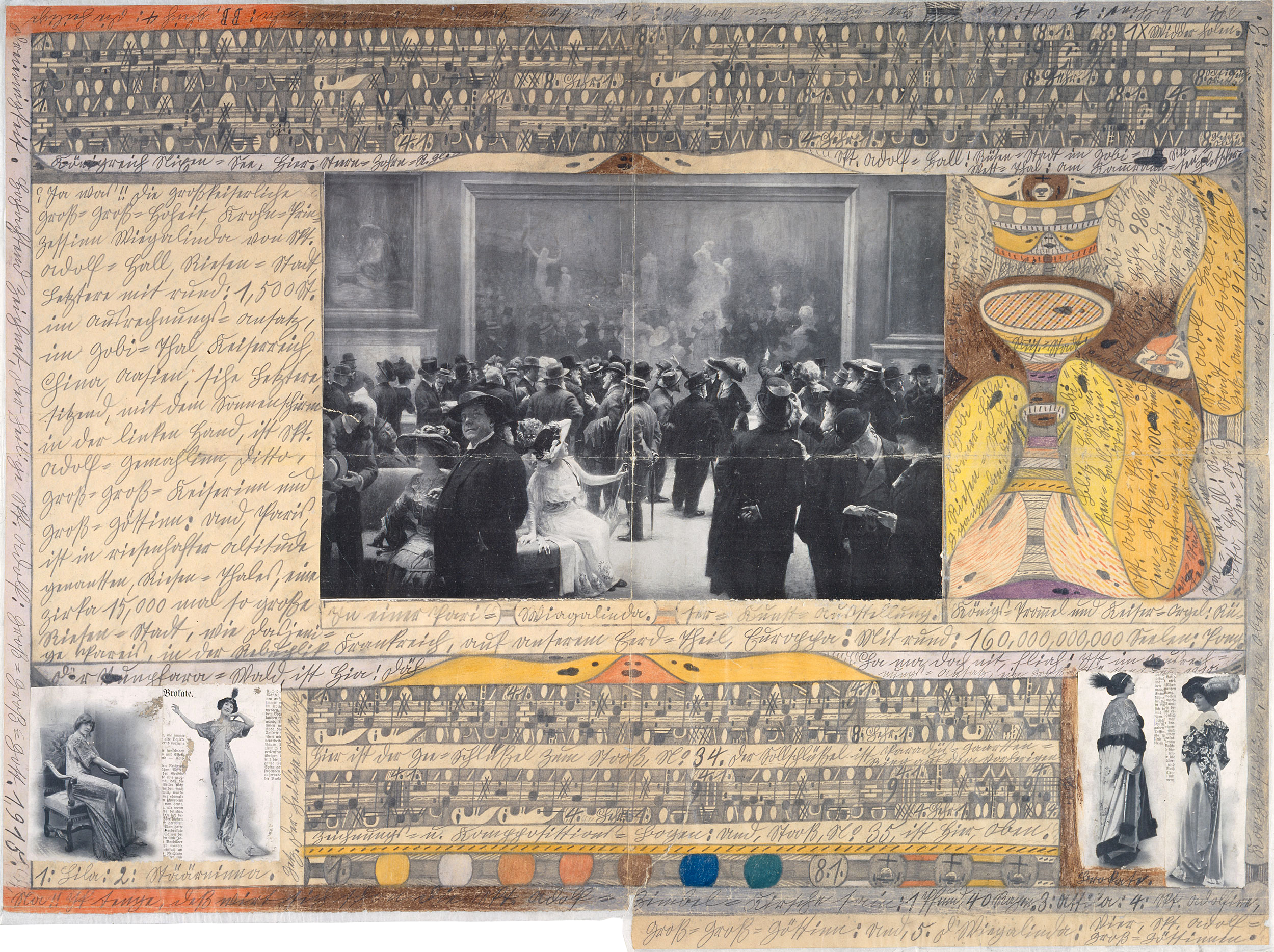
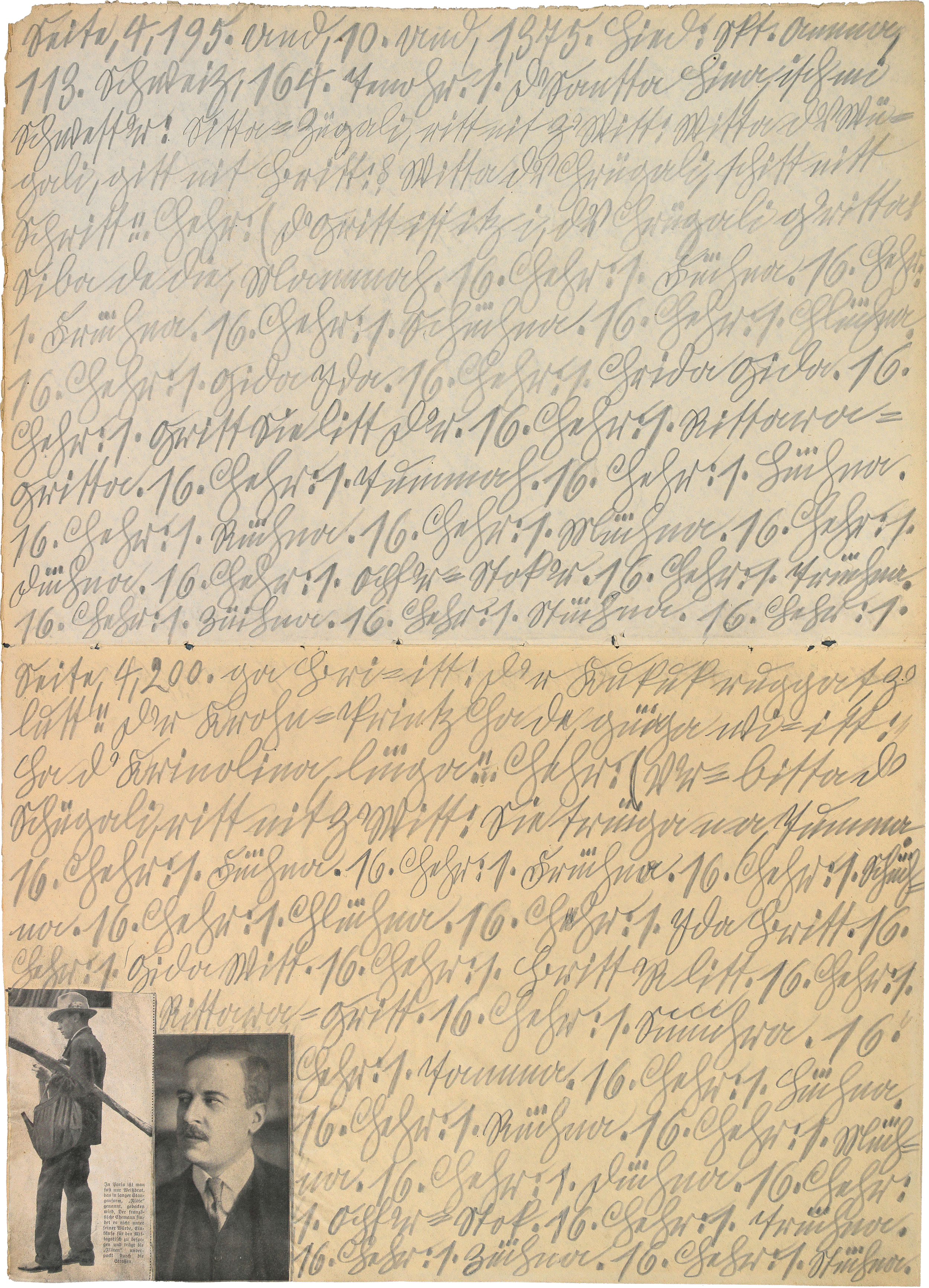
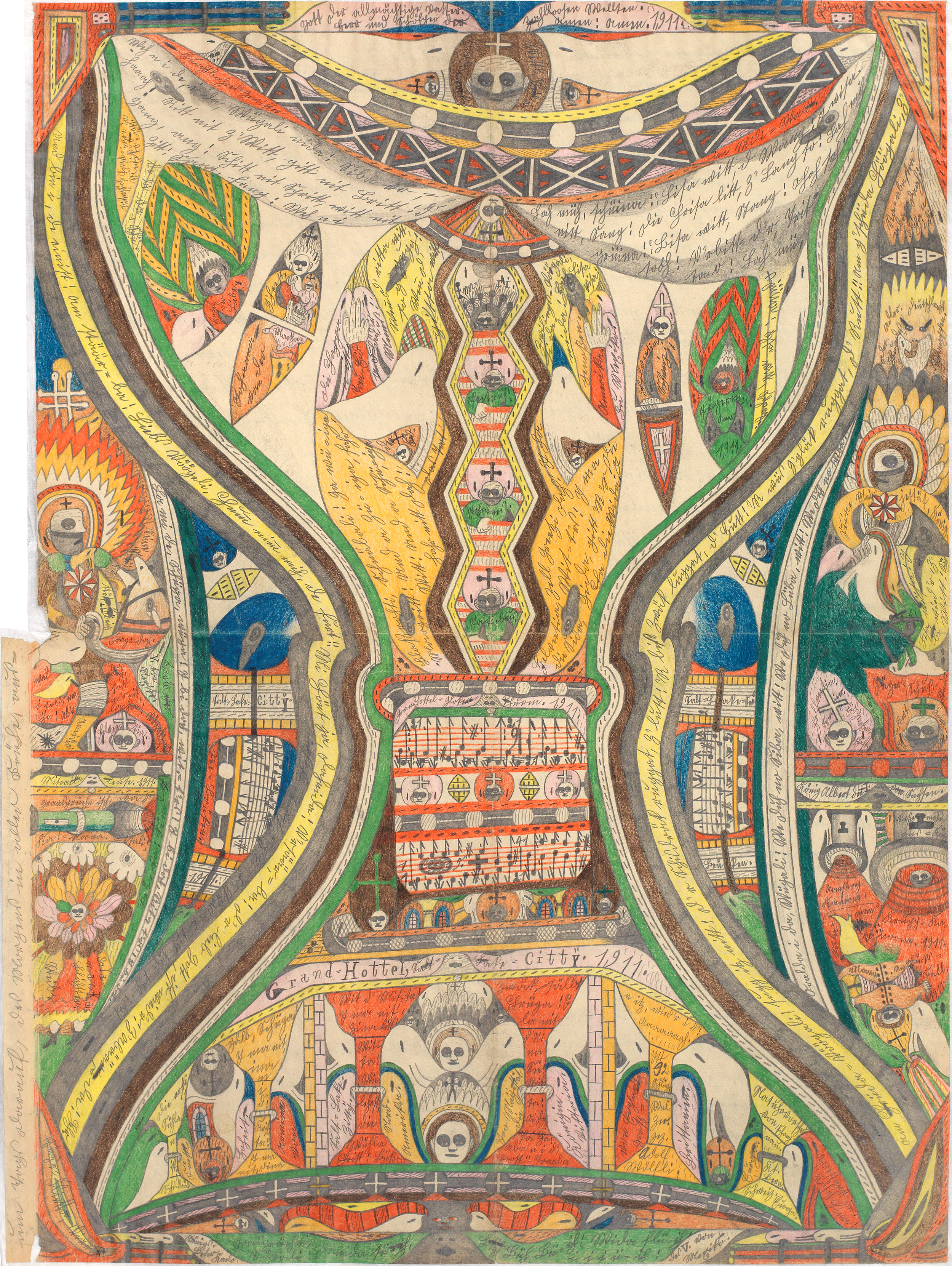
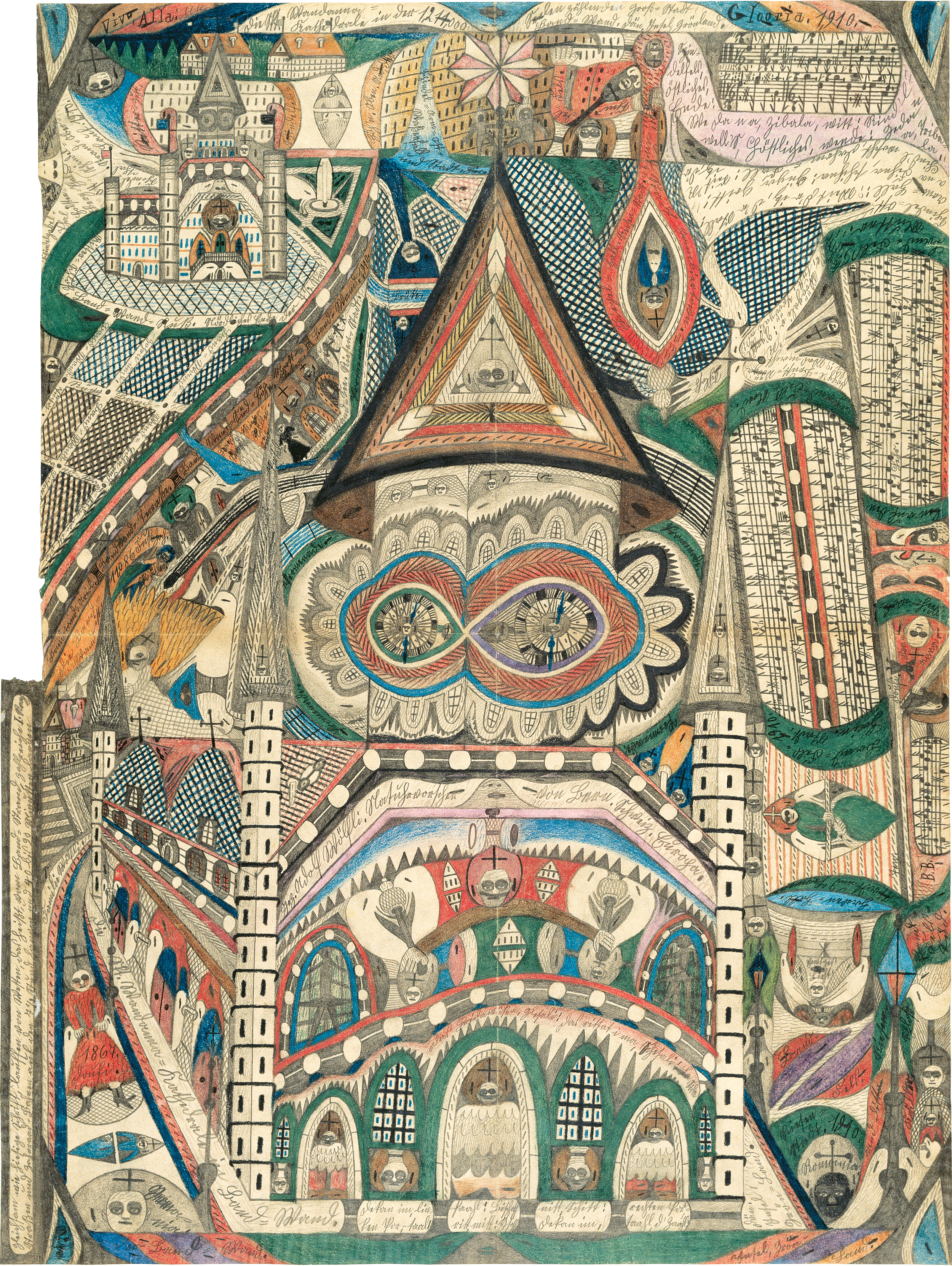
Music is another aspect of the content of the early drawings. The appearance of such a primary symbolic form as the mandala and the primary mathematical principle of binary pattern and progression, which characterize Wölfli's earliest work, are of great significance, indicating his quest for harmony. In view of this strong impulse toward harmony, it is not surprising that Wölfli preferred to think of these drawings as musical compositions. He calls them "sound pieces" and signs them "Composer." They have little in common with the usual forms of music notation: the staves are empty and any indications of rhythm (e.g., "2:1," "4:2"), duration ("music end," "music begin"), or instrumentation ("trumpet," "tam," "cymbal") are written on separate areas of the drawings. The lost pages with solmization rightly deserved the designation "sound pieces." On the other hand, perhaps the empty staves in the drawings indicate that Wölfli conceived of music not only as melody but also as the visual sight/site of sound.

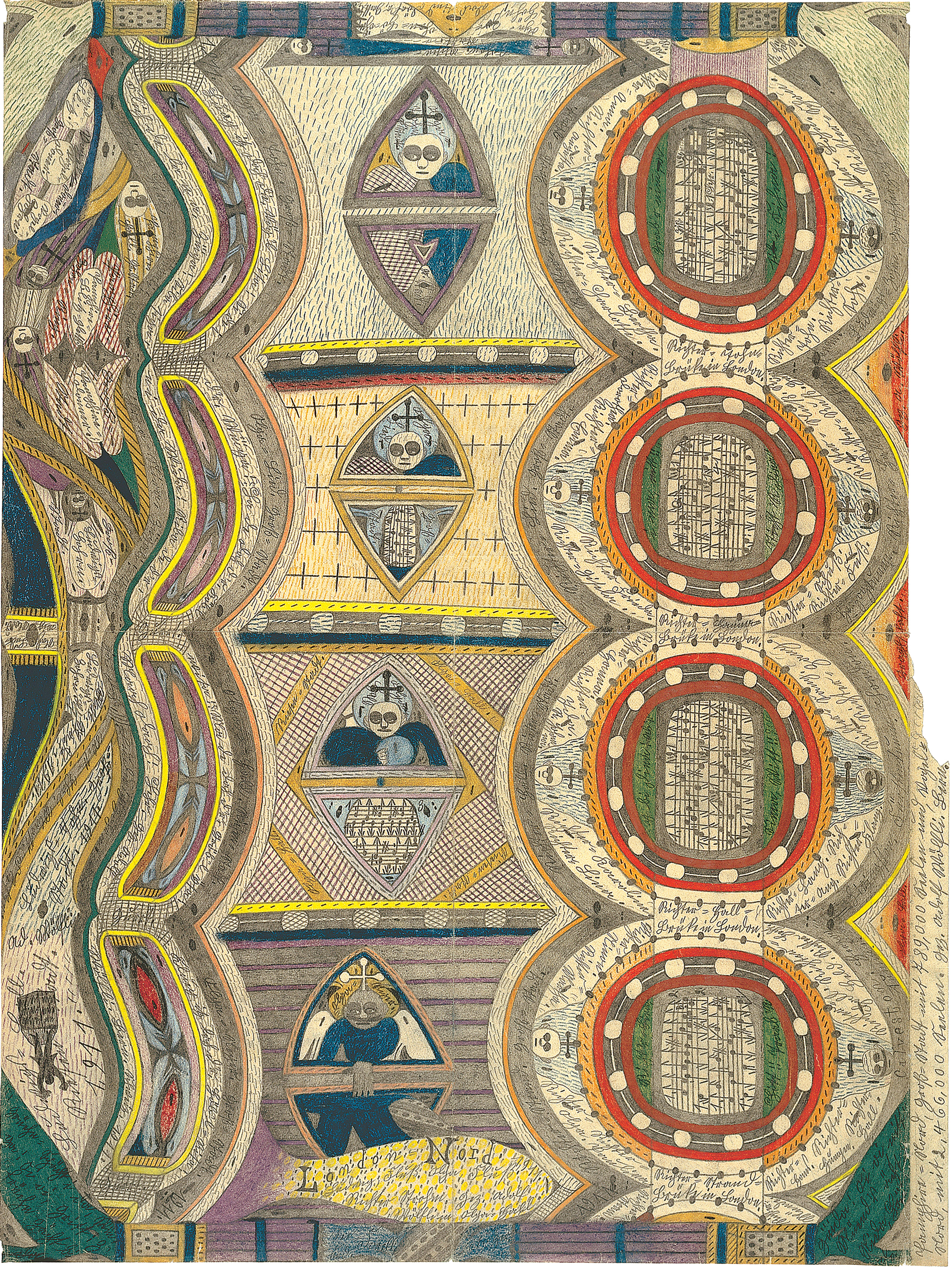
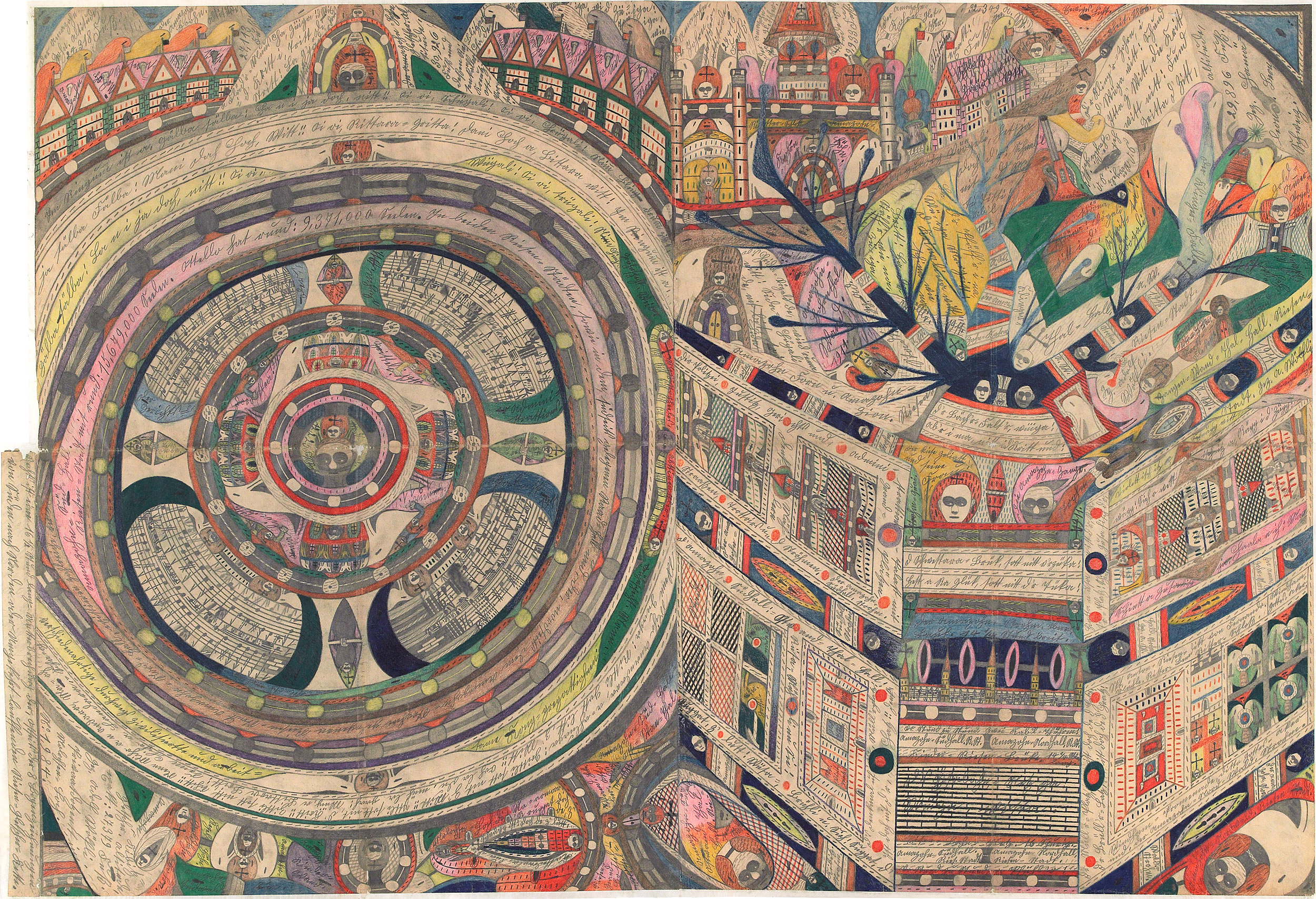
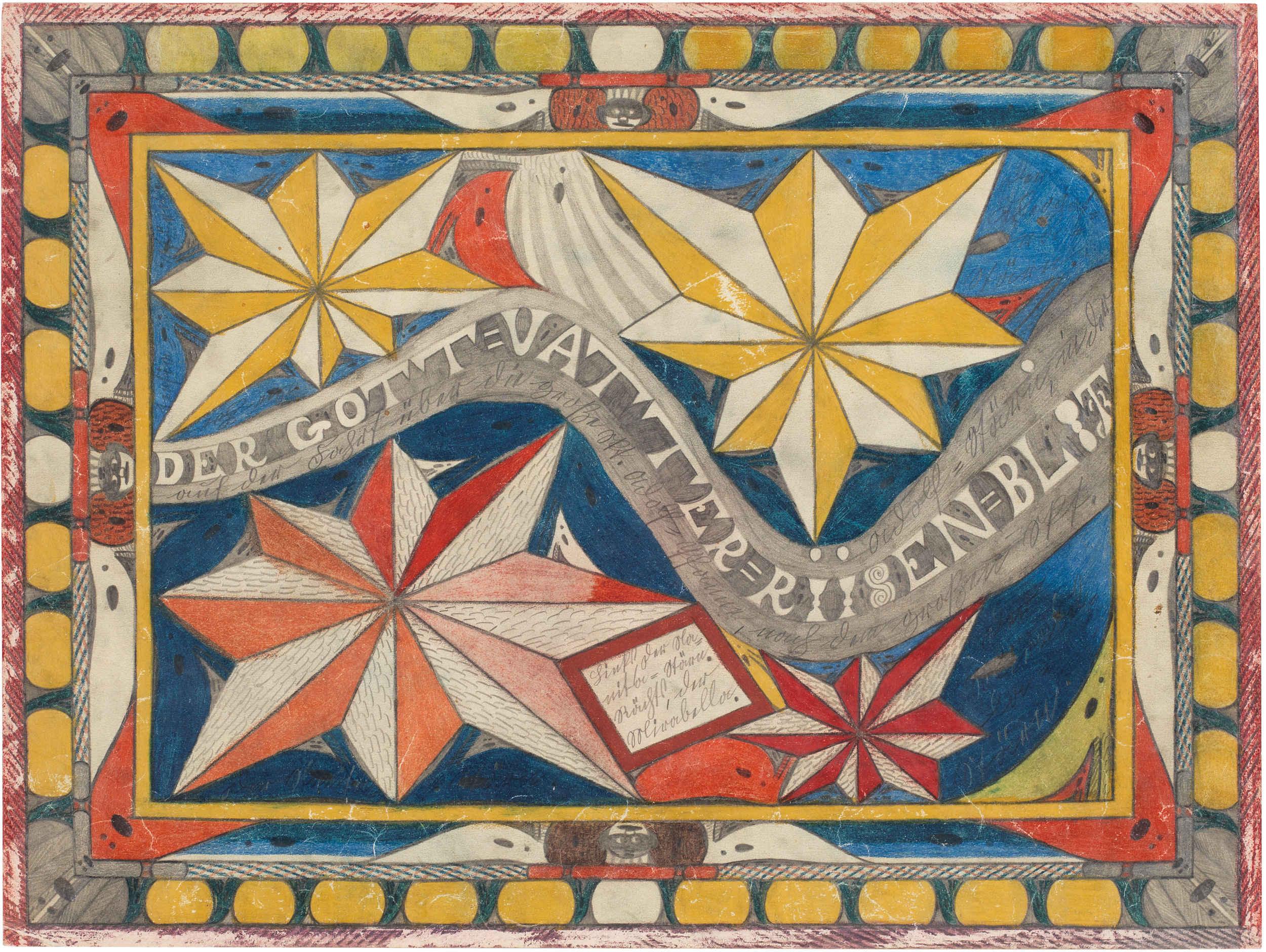
Only a single drawing exists from 1906, „Giant-Bell Grampo-Lina“. That no further drawings are preserved is astonishing, for at the end of 1906 Wölfli wrote in a letter to his sister-in-law that in that year he had sawed and cut a lot of wood, glued four thousand paper bags, and "also [made] many drawings, about 150 newsprint pages, which I gave away, however." Similarly, in the following year, 1907, only three are known, and they are in full color. In a letter to his sister-in-law that year he asks her to send him colored pencils, for "he was drawing industriously." Concerning a visit from his brother, he wrote to her: "I lured him on, with one of the drawings made by me, to be sure, one of the most beautiful ones I ever made." One of the three preserved color drawings from 1907 is „Felsenau“, Bern, which occupies a key position in the development from Wölfli's early pencil drawings to the color illustrations of the narrative work.

It was in 1907 that the first happy event occurred in Wölfli's dismal life: he met Doctor Walter Morgenthaler. After completing a practicum of several months as a volunteer psychiatrist in the Waldau Mental Asylum during that year, Morgenthaler returned to Waldau in 1908 and was active there until 1910 as an assistant physician and from 1913 until 1919 as head physician. He was supportive and encouraged Wölfli's work, which he documented during Wölfli's lifetime. In 1921 he published a pioneering monograph on Wölfli's life and work, “Ein Geisteskranker als Künstler” [„A mentally ill person as an artist“]. Never before had a patient been called an artist and his name been used in the title; even today such treatment is still most unusual in the fields of psychopathology and art.

When Walter Morgenthaler came to Waldau in 1907 he could see Wölfli's early drawings and read Wölfli's "Short life story" in the records. The questions he asked Wölfli about his life and his interest in Wölfli's past must have precipitated the drawing “Felsenau”. Wölfli probably received colored pencils from Morgenthaler, in whose possession this drawing remained. It shows the Felsenau textile mill and factory near Bern, and the surrounding countryside, as well as two extraordinary natural phenomena: the comet Coggia and the Northern Lights (which were both documented in the year 1870). The topography -- the factory site, the steep access road, the tunnel -- corresponds exactly to the local features. Wölfli knew the factory and the surroundings very well from his childhood, for he had lived with his mother in the neighboring Neubrück for a year (1870-1871).

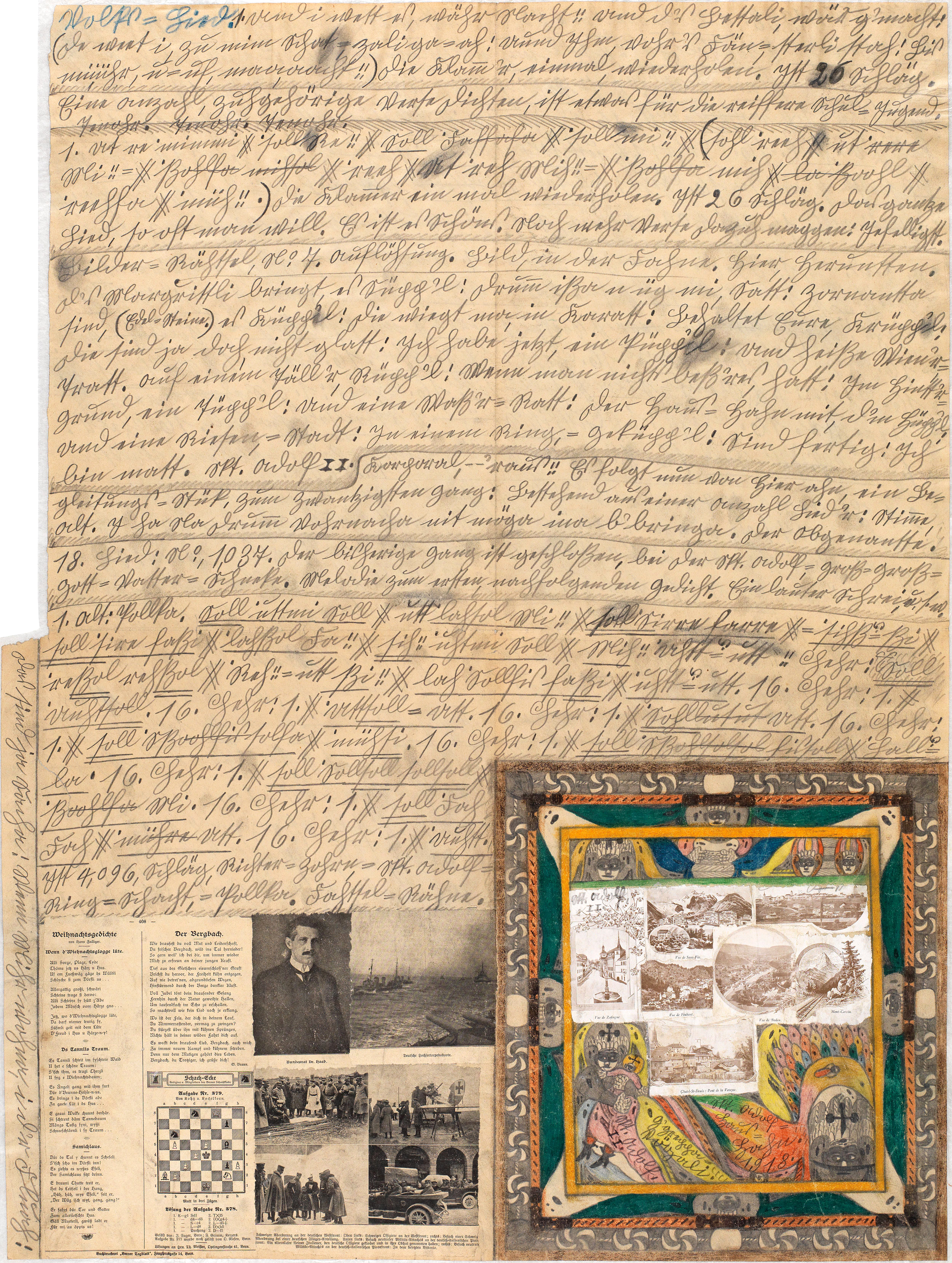
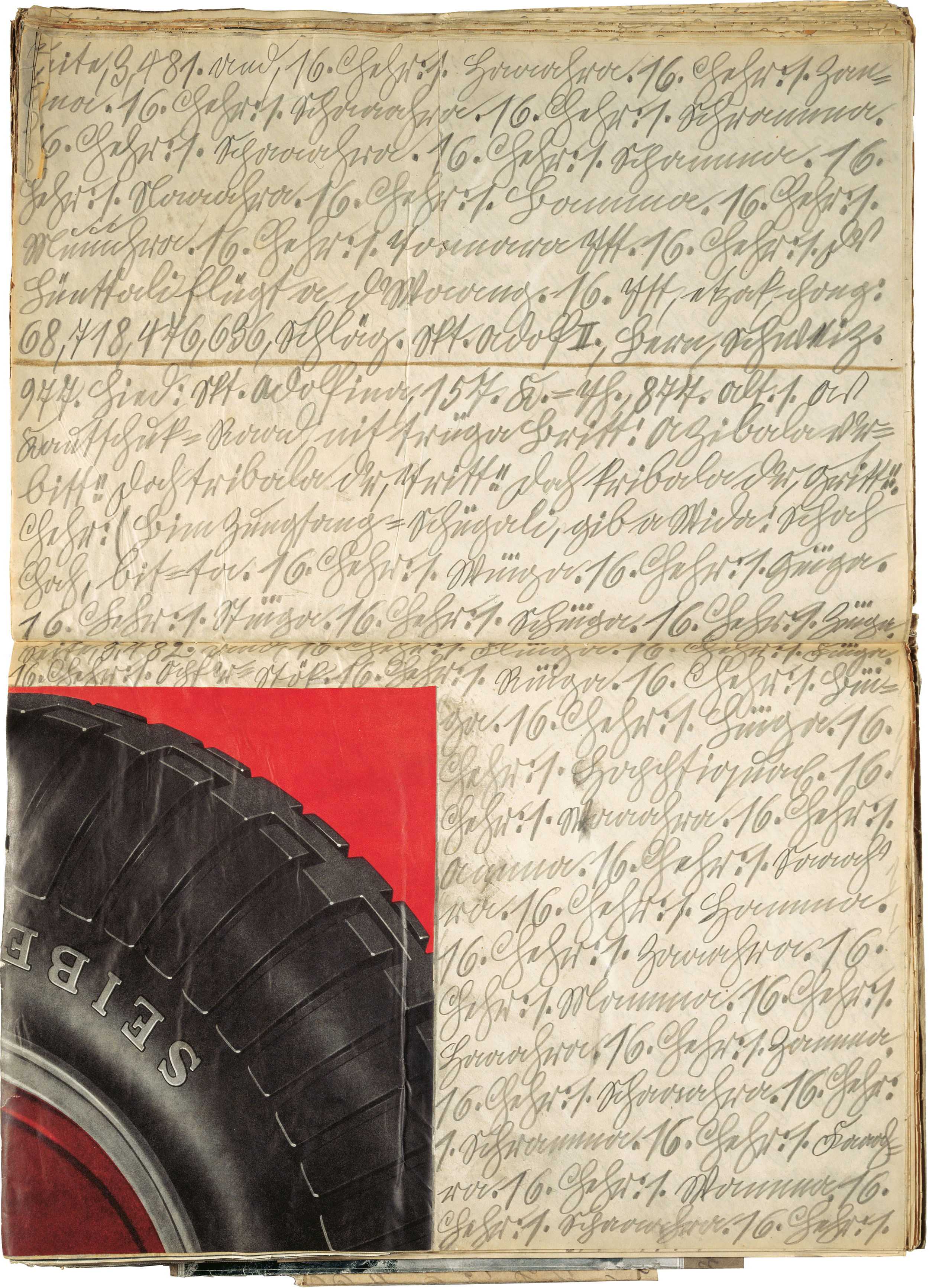
The fruitful encounter between Wölfli and Morgenthaler had as its precondition Wölfli's persistent lonely work on the early drawings. The skill he acquired thereby must have given him his self-confidence as an artist. Wölfli took up the work of his narrative oeuvre in 1908, and he continued it without interruption until his death in 1930.

(Elka Spoerri)